Wednesday, November 27, 2019

Pain Management Benefits of Palmitoylethanolamide (PEA)

Palmitoylethanolamide, or PEA, is a natural substance found in the body that may support pain management. It was discovered in 1957 by scientists extracting it from soybean lecithin, which they referred to at the time as N-(2-hydroxyethyl)-palmitamide. Let’s take a closer look at this breakthrough natural molecule.
What is Palmitoylethanolamide?
Palmitoylethanolamide Structure
PEA is an endogenous fatty acid amide, and a member of the N-acetyl-ethanolamine family. Fatty acid amides, as the name suggests, are formed by a combination of a fatty acid and an amine. They are widely distributed throughout the body and play an important role in cell signaling. PEA itself is commonly found in various foods, including eggs and milk. In addition, being an endogenous compound, PEA is found throughout the human body, including the brain and spinal cord. Interestingly, pain hypersensitivity is associated with a significant decrease in the level of endogenous PEA in spinal cord and in brain areas directly or indirectly involved in nociception. This indicates that PEA is may be vital to the body’s pain response.
In studies, PEA has been shown to bind to the peroxisome proliferator-activated receptor (PPAR-α) in the nucleus of cells. This receptor is responsible for regulating the gene networks connected to the control of pain. Palmitoylethanolamide also has affinity for the cannabinoid-like receptors GPR55 and GPR119. However, PEA does not have affinity for the classic cannabinoid receptors CB1 and CB2. As such, it does not possess the psychoactivity seen in classic cannabinoids. 
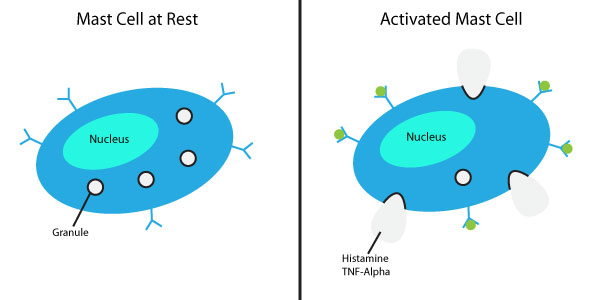
Mast Cell Diagram
PEA also has the ability to reduce the expression of cyclooxygenase-2 (COX-2) and inducible nitric oxide synthase (iNOS). Elevated levels of COX-2 are found during periods of pain. PEA may prevent IkB-alpha degradation and p65 NF-kappaB nuclear translocation, due to its PPAR-alpha agonism. Clinical trials have found that the compound’s action performs numerous biological functions related to chronic pain.
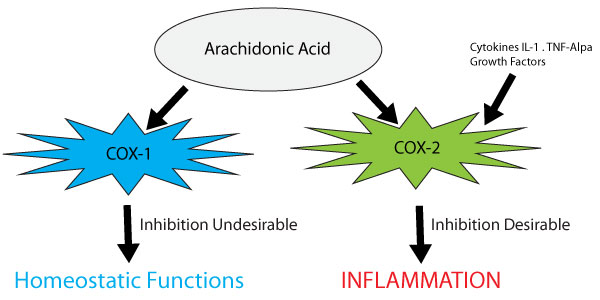
COX Diagram
Palmitoylethanolamide and Endocannabinoids
While PEA is not technically an endocannabinoid, it often gets grouped into the family, particularly with anandamide, because PEA operates via similar metabolic and synthetic pathways. Endocannabinoids are chemical compounds that activate many of the same receptors as THC, which is the active component in marijuana. Both humans and animals naturally synthesize endocannabinoids, which play a crucial role in bioregulation. They are mainly involved in cell signaling; producing same cell (autocrine) and cell-to-cell (paracrine) actions rather than full systemic effects. 
The two novel cannabinoid receptors that palmitoylethanolamide binds to, GPR55 and GPR119, are G protein-coupled receptors found in the human body and brain. GPR55 is activated by both the marijuana cannabinoids Δ 9-THC and cannabidiol, along with anandamide. The GPR55 receptor was only discovered in 1999, and many have started referring to it as the CB3 receptor. Since both PEA and anandamide bind to the GPR55 receptor, supplementing PEA not only leads to the effects modulated by direct binding to the GPR55 receptor, but it also leads to increased binding of anandamide to the CB1 and CB2 receptors. This is because it competes for the GPR55 receptor, leaving more anandamide available for binding to the other cannabinoid receptors.
The GPR119 receptor is another G protein-coupled receptor expressed mostly in the pancreas and gastrointestinal tract. Activation of the GPR119 receptor have been shown to cause a reduction in food intake and reduction in body weight in rats.
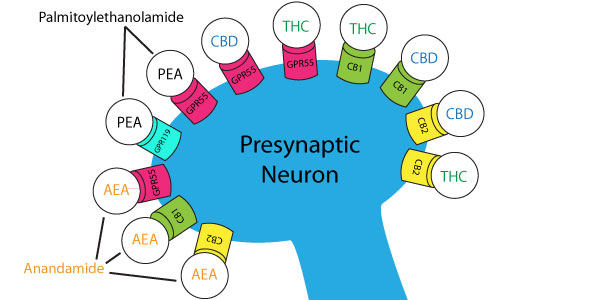
Cannabinoid Diagram
PEA is an endogenous modulator and, as mentioned, it’s already present in many of the foods you already consume. In addition, its novel binding sites make it a unique possible solution for those with chronic pain.
Overall Health Effects of PEA
PEA may offer various potential benefits for overall health. However, it is most well known for its ability to support  pain management.
PEA may also support heart health. Studies with mice using PEA found less injury to heart tissue, decreased cell death, and lower levels of cytokines.
PEA can also potentially support brain health.
Palmitoyalethanolamide is truly an amazing natural compound, with a variety of potential benefits and positive mechanisms in the body and brain. Research about this compound continues to expand on its new benefits and effects.

Source: Nootropicsdepot.com

Thursday, November 1, 2018

Specialized Pro-Resolving Meditators (SMPs): A New Approach to Inflammation

“INFLAMMAGING”
PAIN AND INFLAMMATION ASSOCIATED WITH AGING
  
Inflammation is a natural process in response to injury and infection.  The body’s immune system launches a response when presented with various challenges to help bring healing.  Inflammation, while unpleasant, is actually a necessary part of this response.  But when the inflammation becomes chronic, it can lead to tissue destruction and degenerative changes in the body that can lead to disease.  Many of today’s most feared chronic diseases such as cancer, heart disease, Alzheimer’s, etc, are now known to be linked, at least in part, to an underlying inflammatory process.

The Role of Specialized Pro-Resolving Mediators (SPMs)
The body’s natural inflammatory process is just that – a process.  The immune system will respond to various challenges with an initial inflammatory stage, but then it works to resolve the inflammation through natural chemicals such as macrophages that clean up dead cells and Specialized Pro-Resolving Mediators, or SPMs, that then work to resolve the inflammation and shut down the inflammatory response.
However, as we age our bodies don’t make SPMs as readily as before.  Other factors also affect the body’s production of SPMs, such as stress, poor diet, and lack of exercise.  When SPMs are deficient, the body cannot resolve inflammation as efficiently as before, and chronic inflammation can set in, leading to conditions such as joint stiffness and pain, and other degenerative changes leading to disease and dysfunction.

Thankfully, emerging research from Harvard and other prestigious scientific sources has discovered that SPMs are available nutritionally and can be provided as supplemental to the diet, thereby aiding the body in resolving inflammation. 


Dietary Sources of SPMs

Two natural fatty acids from fish oil, eicosapentaenoic acid (EPA) and docosahexaenoic acid (DHA), when metabolized properly, break down into natural chemicals known as 18- hydroxyeicosapentaenoic acid (18-HEPE) and 17-hydroxydocosahexaenoic acid (17-HDHA).  These chemicals are known as resolvins, as they play a major role in the resolving phase of inflammation.  
However, various health challenges prevent proper conversion of these chemicals, and even when converted properly the small amounts of 18-HEPE and 17-HDHA are inconsequential in the face of significant inflammation.   Eating fish or even taking fish oil supplements would not provide measurable amounts of these resolvins to have any impact on inflammation.  In fact, a person would have to take 7 or more high-potency fish oil supplements every day for 6 weeks to even to begin to show any measurable resolvins.  
However, through collaborative efforts in the scientific community, a revolutionary new  fractionation process has allowed scientists to isolate 18-HEPE and 17-HDHA and provide them in amounts in supplemental form in high enough amounts to have a significant impact on the resolution phase of inflammation.  


Applications for SPM Supplementation

SPM supplementation can and should be considered for any health condition with an inflammatory component.  Research on SPMs have been successfully conducted on the following conditions:
  • Aspiration pneumonia
  • Asthma
  • Cystic Fibrosis
  • Colitis 
  • Periodontitis
  • Dry Eyes
  • Cornea Inflammation
  • Vascular Disease
  • Obesity
  • Type II Diabetes
  • Stroke
  • Alzheimer's Disease
  • All forms of Arthritis
  • Fibromyalgia
  • Acute Injuries
  • Acute Infections
  • Muscle Soreness


References:  
1. Recchuiti, A.  J Gerontol Geriat Res 2014; 3:151 
2. Bento et al. J Immunol 2011;187:1957-1969


Thursday, August 2, 2018

High Dose Folate vs. Broad-Spectrum Nutrition for Methylation Support


The issue of high-dose folate has come up a lot lately, as a number of supplement companies offer folate in excess of 2,000 mcg and sometimes a lot more in products targeted for methylation and homocysteine metabolism. While some references are made to support this, the truth is that the literature is sparse on support of such high doses of folate for any application. Older data has not been validated at all on high-dose folate in certain women's reproductive health concerns, for example.  And, in fact, there appears to be diminishing returns on high-dose folate, as research published in the American Journal of Clinical Nutrition showed that doses of folate of 800 mcg and 2,000 mcg had precisely the same effect on reductions of homocysteine (see my previous post).  

"There are few intervention studies of folic acid or 5-MTHF as a stand-alone treatment." ( 2008 Sep;13(3):216-26) And there are no studies at all to my knowledge that show superior results in high dose folate vs. multiple nutrients.  (​If you know of any, please send them my way.)​
   
While the risk of toxicity of high dose folate is low, keep in mind that supplementation with folate can mask a B12 deficiency. 

In the supplement industry, a "more must be better" approach is often promoted among supplement companies and some practitioners, and this, of course, is the mindset of more ​conventional practitioners, as this is more consistent with the traditional medical model.  Providing mega-doses of any one substance is closer to a pharmacological approach rather than a holistic or complementary one.  ​But again, what does the preponderance of literature say?  As far as I can tell, there are no studies showing benefit of high dose folate vs. combining moderate ​folate amounts ​with other supportive nutrients.  

Truly holistic practitioners must resist the temptation to always believe that more is better.  An older study on vitamin E, for example, showed that mega-doses given to smokers actually seemed to increase the risk of lung cancer.  Why?  Because certain compounds given in mega doses in isolation of other supportive nutrients may turn out to be pro-oxidants rather than antioxidants.  

Thus, the most effective approach may be the one that addresses the potential folate deficiency, along with other deficiencies (B12, for example) while offering a comprehensive plan that takes into account a variety of supportive measures.​

Thus, methylation as a whole (and hence effective homocysteine metabolism)​ is less a situation of a singular nutrient and more a breadth of supportive accessory nutrients, such as zinc, B6, B12, betaine, molybdenum, N-acetylcysteine, and others. In other words, the more "natural" and effective approach is likely not high-dose folate but rational folate intake coupled with other methylation support nutrients. 


Friday, March 9, 2018

Folate and Homocysteine: Is There Diminishing Returns?

By now it is common knowledge that B-vitamins, particularly folate, B6, and B12, are extremely important to metabolize the amino acid, homocysteine, which is an intermediate in the metabolism of methionine and cysteine, and has been implicated in vascular disease.

Recently I had the opportunity to review a nutritional product that was touted as a supreme homocysteine support product.  It looked good, actually, but something stood out to me that is apparently not common knowledge among practitioners and supplement manufacturers.

The more-is-better idea is a common mindset among holistic pill poppers and those recommending them.  However, the idea that more is better does not apply to many things, and folate's role in homocysteine metabolism is one of them.

The supplement I reviewed has over 2,000 mcg of folate, which impresses many casual observers.  However, it must be noted that according to a study on homocysteine and folate published in The American Journal of Clinical Nutrition, even very low dose folate supplementation of 200 mcg lowers homocysteine significantly, and most notably, there was no difference in high dose folate supplementation and moderate dose supplementation in lowering homocysteine levels. (See chart below.)  Moderate dosing of 800 mcg lowers homocysteine by 23%, but pushing the dose up to 2,000 mcg did not show any additional benefit.  Even very high dosing at 5,000 mcg showed only minimal additional benefit of a mere two percentage points.  


What might make more sense in achieving the perfect formula for homocysteine metabolism is to keep the folate levels moderate in order to keep the cost down and make room for other important nutrients that aid in the methylation cycle and renal clearance of homocysteine -- nutrients such as molybdenum, N-acetylcysteine (NAC), manganese, betaine, etc.

NAC, in particular, is an important antioxidant that serves many roles in the body.  For example, it is an amazingly powerful antioxidant that supports liver detoxification and glutathione levels in the body, but it is also important for renal clearance of homocysteine.  Therefore, significant amounts of NAC (500 mg or more) should be considered to support those with elevated homocysteine or who have had a history of issues along these lines.

Consider supplementation that supports all four levels of homocysteine clearance (see below).


Saturday, February 3, 2018

Colostrum vs. 2'FL: What you Need to Know

Colostrum is being touted by some sources as the "best" thing for gut health.  But there are some things to be aware of.

First of all, colostrum products are not derived from human sources, but bovine.  Cows, of course, have radically different GI function compared to humans, and bovine colostrum is different in its composition compared to human colostrum.  While there is some evidence that bovine colostrum can have some benefit in humans, it also must be pointed out that commercially available colostrum products also typically contain milk proteins, which would rule them out for people with milk allergies.  

There is also an ethical consideration to "true" colostrum pertaining to mother's "first milk." Some feel an ethical consideration whereby that "first milk" be saved for the feeding calf and not harvested for commercial use. This is an animal rights issue, as well as ultimately a human health issue, since beef raised without the benefit of colostrum can be less healthy.

Therefore, some companies have chosen to avoid this kind of product and go instead with products that are colostrum-like or contain ingredients that provide some of the same healing properties, but without the milk proteins and without the ethical concerns.

Biopure ProteinTM, for example, is not colostrum, but colostrum-like in that there is higher immunoglobulin content and special processing to preserve these immunoglobulins. These milk-derived immune proteins are as high in concentration as colostrum, and, in some cases, can be even higher, because the immunoglobulins can vary with the seasons.

Another choice is the human milk oligosaccaride (HMO), 2' fucosyllacstose, or 2'FL.  This new and novel ingredient is considered an HMO because it is an oligosaccaride bioidentical to the ones found in HUMAN breast milk.  

Colostrum is the first secretion of milk produced by the mammary glands in late pregnancy and a few days after giving birth, used as ‘first feeding’ of the infant.  2’FL is found in human colostrum as it is a naturally occurring component of human breast milk (one of the most abundant HMOs). It is an important prebiotic and anti-adhesion compound. (Human colostrum, by the way, is not available as a dietary supplement.  At least we hope not!)

The researh on 2'FL is piling up, showing that it has potent antimicrobial properties, as well as providing fuel for the growth and proliferation of probiotic bacteria, thus helping to establish a healthy microbiota.  

A 6-week study on the functional food product, UltraGI Replenish, studied on patients with a history of IBS and IBD (but not acute during the time of the study) showed that 7 of 8 pathogenic bacteria were no longer detectable at the end of the six weeks, and bifidobacteria went wild, increasing 19-fold!  SCFAs also increased significantly, in addition to the improvements of several other gut biomarkers.  Symptoms and quality of life scores also improved dramatically.1 

There is no shortage of players in nature's pharmacy for gut health, and 2'FL appears to be one of the most promising ingredients on the market to emerge in a long time.   

1. A Medical Food (UGIR) Reduces Gastrointestinal Symptoms and Beneficially Alters Gut Microbiota in Adults with IBS and IBD
A Multi-Clinic, Open-Label Study, MET2151 070516 © 2016 Metagenics, Inc. All Rights Reserved.
  

Tuesday, January 30, 2018

VITAMIN C: Still a Superstar and Growing in Fame Even More

Since the 1970s, Vitamin C has enjoyed superstar status, partly due to Dr. Linus Pauling's Nobel Prize winning work.  But for the past several years, good ole' ascorbic acid has been making a rebound in the research, as this "old news" vitamin has been showing great promise for a number of health applications other than just immunity.  
For example, research has shown that vitamin C protects against endothelial dysfunction, high blood pressure, and the blood vessel changes that precede heart disease.1-3 Additional research is discovering that vitamin C can be helpful in preventing asthma,4 protecting against cancer,5 and supporting healthy blood sugar levels in diabetics.6
While often taken for granted, vitamin C is a critical supplement in improving cardiac health and avoid degenerative diseases.  

British researchers, for example, studied the effects of vitamin C supplementation (250 mg/day) on atherosclerosis in 40 healthy adults.7 Before the study, subjects with low pre-supplementation levels of vitamin C had 30% greater monocyte adhesion than normal, putting them at higher risk for atherosclerosis. Impressively, after six weeks of supplementation, the rate of this dangerous monocyte adhesion actually fell by 37%!  

OTHER HEALTH BENEFITS OF VITAMIN C IN THE RESEARCH
  • Ascorbic acid, or vitamin C, is a potent antioxidant with increasingly diverse uses in health promotion and disease prevention. 
  • Every step in the progression of atherosclerosis can benefit from the antioxidant power of vitamin C, from preventing endothelial dysfunction and altering lipid profiles and coagulation factors to preventing blood vessel changes that can lead to strokes and other vascular catastrophes. 
  • Vitamin C supplements reduce cellular DNA damage that is the vital first step in cancer initiation and also reduce the inflammatory changes that allow a malignant cell to grow into a dangerous tumor.  Additionally, vitamin C has been shown to be chemoprotective, showing protection from both the toxic effects of chemotherapy drugs, but also increasing the anti-tumor activity of chemotherapy, while perhaps reducing the risk of getting cancer in the first place.  8,9,10,11,12,13,14
  • Vitamin C supplements enhance the health-promoting effects of exercise and reduce exercise-induced oxidative damage. 15
  • Vitamin C supplements also dramatically combat the oxidative damage caused by smoking and exposure to tobacco smoke. 16
  • In respiratory conditions, vitamin C supplements help avert or shorten the duration of common colds and may mitigate the risk of serious respiratory conditions like asthma.17, 18,19
  • Vitamin C supplements can speed the clearance of the stomach disease-causing bacterium Helicobacter pylori and cut the risk of gastric cancer it causes.  20,21

While all the above benefits can be obtained by taking basic ascorbic acid, the effects may be enhanced by either adding other antioxidants to the mix, or providing a buffered and better absorbed forms.  Vojdani et al at Drew Medical College showed in 1993 that an admixture of vitamin C metabolites, presursors, and asorbates, along with a more bioavailable form of vitamin C, ascorbyl palmitate, was able to not only provide better uptake into the white blood cell, but the effect on leukocyte activity and overall immunity was profoundly better than ascorbic acid alone.22  This exact formula used in the Drew Medical College study is patented and available commercially in only one place.  Ascorbic acid products are typically not patented and are bountiful on the market.  

Still another study showed that a buffered admixture vitamin C supplement increased the natural killer (NK) cell activity 10-FOLD in 78% of patients who had decreased NK, T and B cell function due to chemical exposure!  T and B cells also returned to normal.23  

Yes, while vitamin C is sort of yesterday's news in a market of trendy supplements now too long to list, it remains one of the most powerful and effective vitamins in the world for overall health. 

References
1. Rossig L, Hoffmann J, Hugel B, et al. Vitamin C inhibits endothelial cell apoptosis in congestive heart failure. Circulation. 2001 Oct 30;104(18):2182-7.
2. Fotherby MD, Williams JC, Forster LA, Craner P, Ferns GA. Effect of vitamin C on ambulatory blood pressure and plasma lipids in older persons. J Hypertens. 2000 Apr;18(4):411-5.
3. Salonen RM, Nyyssonen K, Kaikkonen J, et al. Six-year effect of combined vitamin C and E supplementation on atherosclerotic progression: the Antioxidant Supplementation in Atherosclerosis Prevention (ASAP) Study. Circulation. 2003 Feb 25;107(7):947-53.
4. Romieu I, Sienra-Monge JJ, Ramirez-Aguilar M, et al. Antioxidant supplementation and lung functions among children with asthma exposed to high levels of air pollutants. Am J Respir Crit Care Med. 2002 Sep 1;166(5):703-9.
5. Guz J, Dziaman T, Szpila A. Do antioxidant vitamins influence carcinogenesis?. Postepy Hig Med Dosw.(Online.). 2007;61:185-98.
6. Afkhami-Ardekani M, Shojaoddiny-Ardekani A. Effect of vitamin C on blood glucose, serum lipids & serum insulin in type 2 diabetes patients. Indian J Med Res. 2007 Nov;126(5):471-4. 
7. Woollard KJ, Loryman CJ, Meredith E, et al. Effects of oral vitamin C on monocyte: endothelial cell adhesion in healthy subjects. Biochem Biophys Res Commun. 2002 Jun 28;294(5):1161-8.
8. Bast A, Haenen GR, Bruynzeel AM, Van d, V. Protection by flavonoids against anthracycline cardiotoxicity: from chemistry to clinical trials. Cardiovasc Toxicol. 2007;7(2):154-9.
9. bdel-Latif MM, Raouf AA, Sabra K, Kelleher D, Reynolds JV. Vitamin C enhances chemosensitization of esophageal cancer cells in vitro. J Chemother. 2005 Oct;17(5):539-49.
10. Chen J, Kang J, Da W, Ou Y. Combination with water-soluble antioxidants increases the anticancer activity of quercetin in human leukemia cells. Pharmazie. 2004 Nov;59(11):859-63.
11. Chen J, Wanming D, Zhang D, Liu Q, Kang J. Water-soluble antioxidants improve the antioxidant and anticancer activity of low concentrations of curcumin in human leukemia cells. Pharmazie. 2005 Jan;60(1):57-61.
12. Correa P, Fontham ET, Bravo JC, et al. Chemoprevention of gastric dysplasia: randomized trial of antioxidant supplements and anti-helicobacter pylori therapy. J Natl Cancer Inst. 2000 Dec 6;92(23):1881-8.
13. Maramag C, Menon M, Balaji KC, Reddy PG, Laxmanan S. Effect of vitamin C on prostate cancer cells in vitro: effect on cell number, viability, and DNA synthesis. Prostate. 1997 Aug 1;32(3):188-95.
14. Wei DZ, Yang JY, Liu JW, Tong WY. Inhibition of liver cancer cell proliferation and migration by a combination of (-)-epigallocatechin-3-gallate and ascorbic acid. J Chemother. 2003 Dec;15(6):591-5.
15. Thompson D, Williams C, McGregor SJ, et al. Prolonged vitamin C supplementation and recovery from demanding exercise. Int J Sport Nutr Exerc Metab. 2001 Dec;11(4):466-81.
16. Block G, Jensen C, Dietrich M, et al. Plasma C-reactive protein concentrations in active and passive smokers: influence of antioxidant supplementation. J Am Coll Nutr. 2004 Apr;23(2):141-7.
17. Romieu I, Trenga C. Diet and obstructive lung diseases. Epidemiol Rev. 2001;23(2):268-87.
18. Trenga CA, Koenig JQ, Williams PV. Dietary antioxidants and ozone-induced bronchial hyperresponsiveness in adults with asthma. Arch Environ Health. 2001 May;56(3):242-9.
19. Tecklenburg SL, Mickleborough TD, Fly AD, Bai Y, Stager JM. Ascorbic acid supplementation attenuates exercise-induced bronchoconstriction in patients with asthma. Respir Med. 2007 Aug;101(8):1770-8.
20. Correa P, Fontham ET, Bravo JC, et al. Chemoprevention of gastric dysplasia: randomized trial of antioxidant supplements and anti-helicobacter pylori therapy. J Natl Cancer Inst. 2000 Dec 6;92(23):1881-8.
21. Chuang CH, Sheu BS, Kao AW, et al. Adjuvant effect of vitamin C on omeprazole-amoxicillin-clarithromycin triple therapy for Helicobacter pylori eradication. Hepatogastroenterology. 2007 Jan;54(73):320-4.

22.  Vajdoni, A, et al.  In Vivo Effect of Ascrobic Acid on Enhancement of Human Natural Killer Cell Activity.  Drew University of Medicine and Science, Published in Nutritiona Research, Vol. 13, pp. 753-764, 1993.

23. Enhancement of natural killer cell activity and T and B cell function by buffered vitamin C in patients exposed to toxic chemicals: Immunopharmacol Immunotoxicol. 1997 Aug;19(3):291-312 


Thursday, December 28, 2017

How Detoxification Can Change Lives (Kenny and Julia Loggins)

Singer/songwriter, Kenny Loggins, who has become known as the king of movie hits, has sold over 40 million records over a span of more than 30 years and won two Grammys.  If you are my age, some of you might know him for hits like, I'm Alright, Meet Me Halfway, and numerous others.  

Several years ago, Julie Katke, the daughter of Metagenics founder, Jeffrey Katke, was walking on a southern California beach, when who did she bump into?  You guessed it.  Kenny Loggins and his wife Julia were walking on the same beach, and Julie decided to introduce herself.  It turned out that the Loggins' were very nice and approachable people, and they stopped to talk with Julie for a few minutes.  They asked her what she did for a living, and she mentioned her career with Metagenics.  When she said the word, "Metagenics," suddenly the eyes of the couple got wide. Kenny said, "You've got to be kidding!"  And he turned to his wife and unzipped her backpack and pulled out a container of Ultra Clear.  He excitedly informed Julie that the product had saved his wife's life.

They went on to tell the story of Julia's long and extended illness for which they could find no help, and the Ultra Clear was the only thing that had helped her, and had ultimately helped to restore her health.  

I have seen stories like this over and over for the last 24 years of my career, and one of those stories is my own, which I will share in a different post.

If you have not yet experienced the life-changing benefits of nutrient-tailored metabolic detoxification, look into the Metagenics detox products such as the Ultra Clear line, or the Clear Change Detox Kits.